
Garlic goes gold in the wok. The noodles hit the hot oil, and the sauces hiss at the edge. Cook along with Chris and Eddie and see how much happens in a few quick folds.
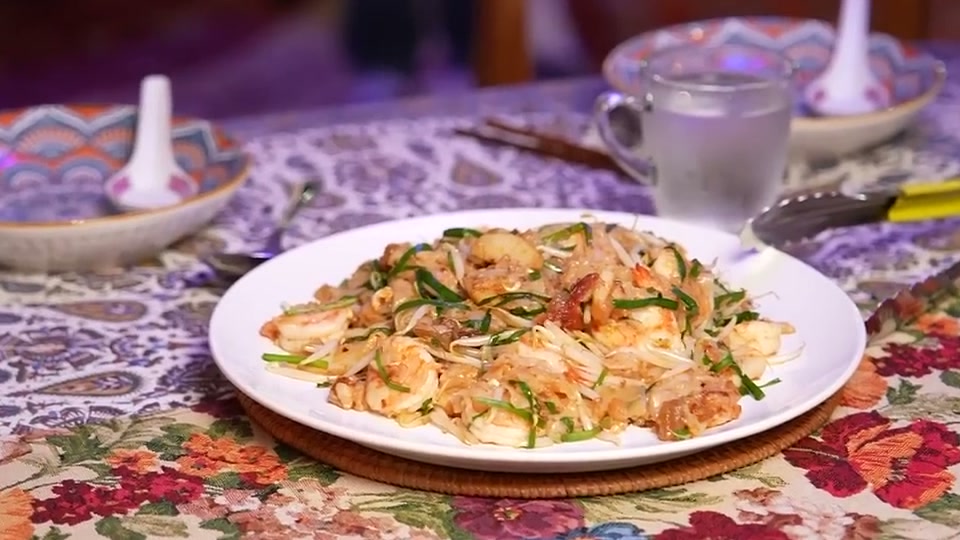
The order matters.
Char kway teow is quick cooking with a sequence worth remembering. Brown the garlic, coat the noodles in hot oil, then bring in the soy sauce, fish sauce, chilli paste and stock together at the side. Chives, sugar and sprouts follow; egg goes in before the already cooked prawns.
A hawker classic, Chris’s way.
Char kway teow belongs to Singapore’s hawker tradition, with Hokkien and Teochew associations. The dish has many versions. Here, Chris uses pork lard, lap cheong, fish cake and pre-cooked prawns.
Watch the film
Duration 4:58 · English captions available
Chris cooks with Eddie Rivera. Before the wok gets hot, have every ingredient within reach.
Download printable recipe (PDF)
Heat and wok hei
Wok hei needs very high heat and brief contact with the hot wok. Use a small enough batch to keep a strong sizzle during the noodle-frying stage; lower the heat whenever garlic, chilli paste or sugar begins to scorch. Use a seasoned, uncoated wok suited to this heat. For a coated or nonstick pan, follow the maker’s heat limits and never preheat it empty.
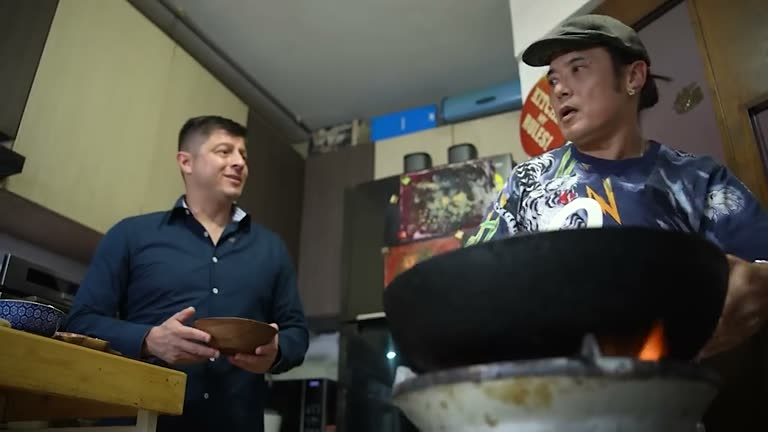
Ingredients
The film does not specify weights or measured amounts. Use it to follow the order and judge proportions; season to taste.
Wok base, noodles and sauces
- Pork lard
- Garlic
- Crispy pork-lard pieces
- Fish cake slices
- Lap cheong (Chinese sausage)
- Flat rice noodles (kway teow)
- Soy sauce
- Fish sauce
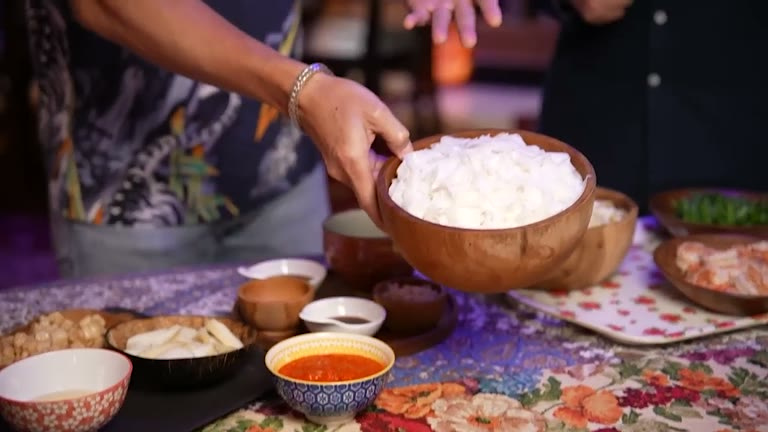
Before the wok gets hot
Have a seasoned, uncoated wok suitable for very high heat, a wok spatula and small ingredient bowls ready. Turn on the extractor or ventilate the kitchen before heating the wok.
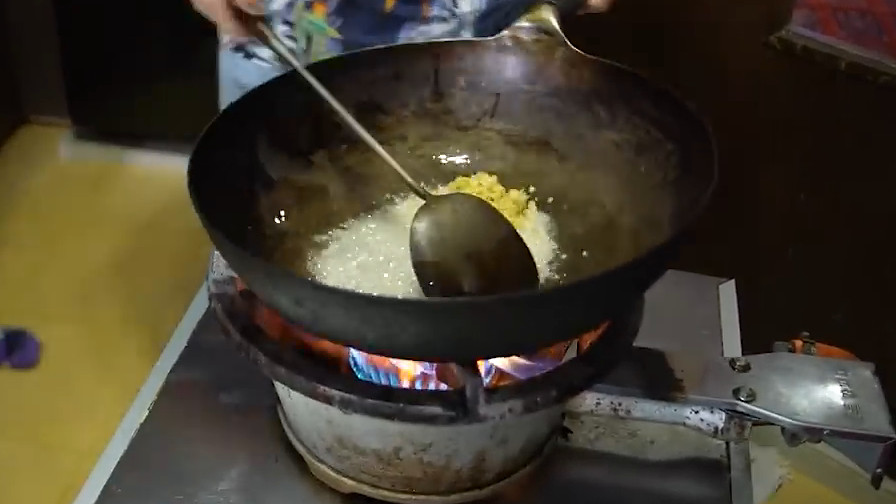
The ingredients and cooking order follow the film. The noodle preparation, heat management and doneness cues below are additional guidance for cooking at home.
Seasoning, greens and finish
- Stock
- Chinese chives
- Chilli paste
- Sugar
- Bean sprouts
- Egg
- Pre-cooked prawns
- Pepper
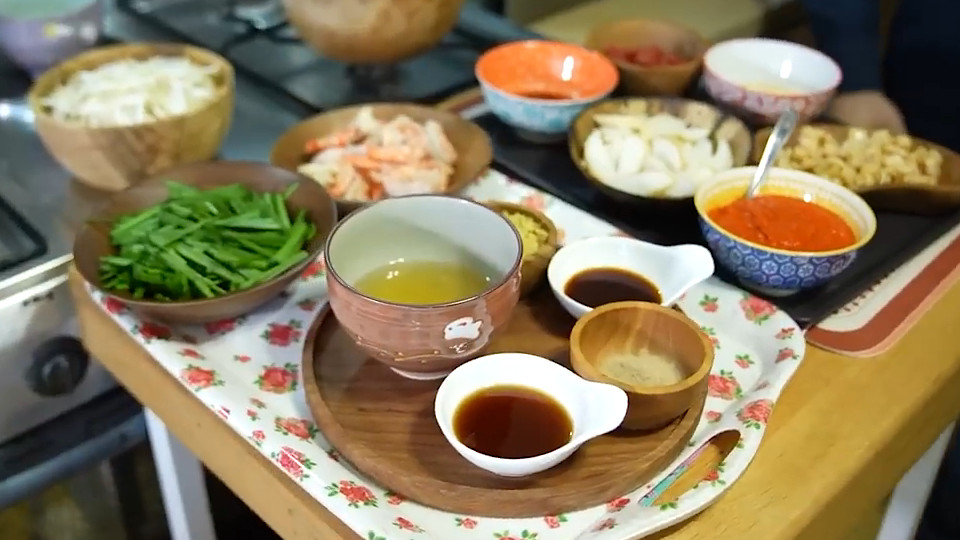
Method
1. Get everything ready
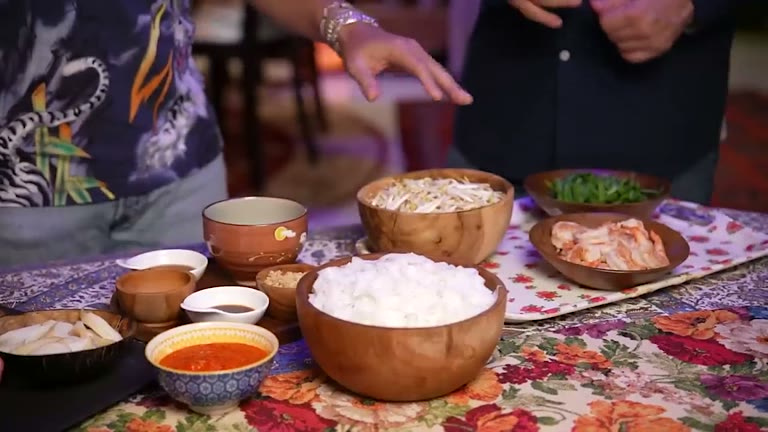
Set out all 16 ingredients before heating the wok, with the sauces and stock within reach. Gently separate the flat rice noodles; if using dried noodles, prepare them according to the packet first. Drain away free water so the noodles do not enter the wok dripping, and drain the washed chives and bean sprouts well. Plan smaller complete batches if the noodles would sit in a deep, crowded pile; follow the same ingredient order for each batch.
2. Brown the garlic
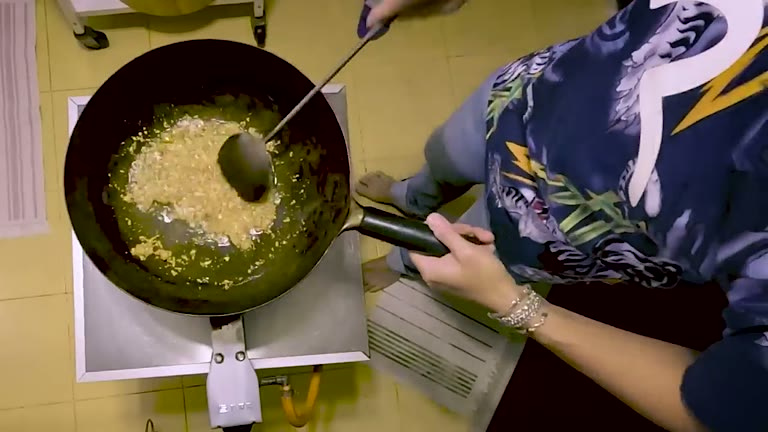
Preheat the seasoned, uncoated wok until very hot, then add the pork lard and swirl it across the cooking surface. Add the garlic and keep it moving at a steady sizzle until golden brown and fragrant. If it darkens rapidly or the fat smokes heavily, lower the heat or briefly lift the wok from it; do not let the garlic turn black. Once the garlic has browned, add the crispy pork-lard pieces.
3. Add fish cake and lap cheong
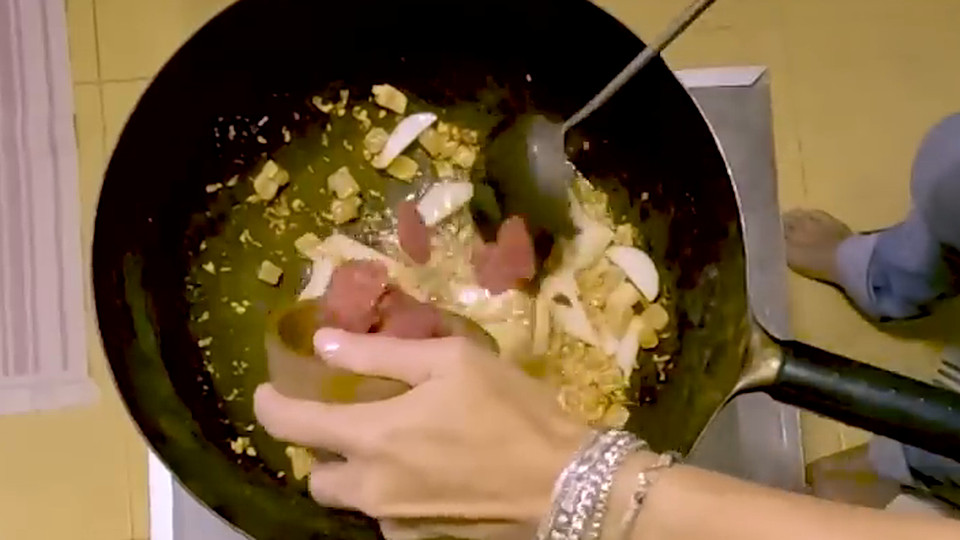
Add the fish cake slices and lap cheong and stir them through the garlic and lard. Scoop and turn so the slices meet the hot wok and heat through evenly. Keep the garlic moving with the other ingredients so it does not sit against the bare metal and burn while you prepare the noodles.
4. Coat the noodles
Raise the heat to very high for the noodle-frying stage, then add the flat rice noodles. Scoop from underneath, spread and gently fold them through the fat until evenly coated, before adding any wet seasoning. Keep a brisk sizzle and let the noodles touch the hot wok without leaving them still long enough to burn; handle the ribbons gently so they stay broad rather than breaking up. If the sizzle fades and the noodles remain wet and steamy, let the wok recover its heat while you keep folding, and use a smaller batch next time.
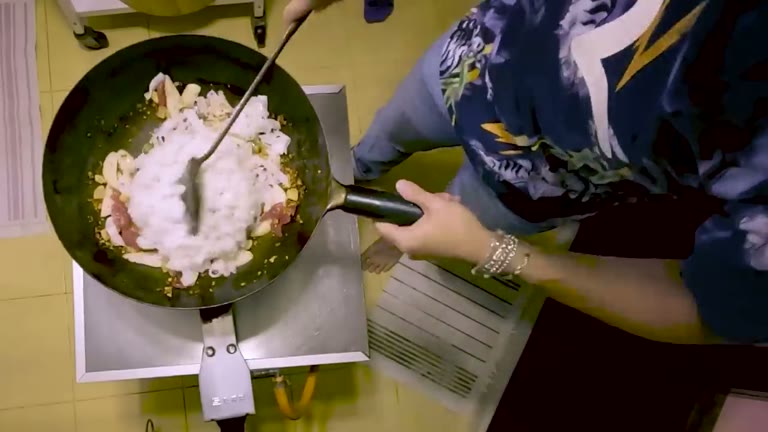
5. Season at the side
Push the coated noodles to one side to expose a hot area of the wok. Add the soy sauce, fish sauce, chilli paste and a little stock together onto that exposed side; let them sizzle briefly, then promptly fold the noodles through. Keep scooping and turning until the seasoning coats the noodles evenly. Avoid leaving the seasoning on the bare metal to burn or adding so much liquid that the noodles sit in a pool.
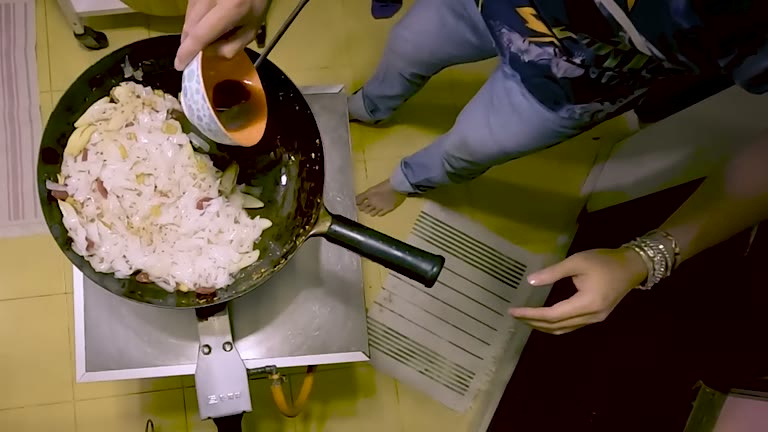
6. Add the chives and bean sprouts
Add the Chinese chives first, followed by a little sugar and then the bean sprouts, in that order. Fold each addition through the noodles, keeping everything moving across the hot wok. Cook until the chives begin to wilt and the sprouts are hot while retaining some crunch. If the chilli paste or sugar starts sticking and blackening, ease the heat and keep folding rather than allowing it to scorch.
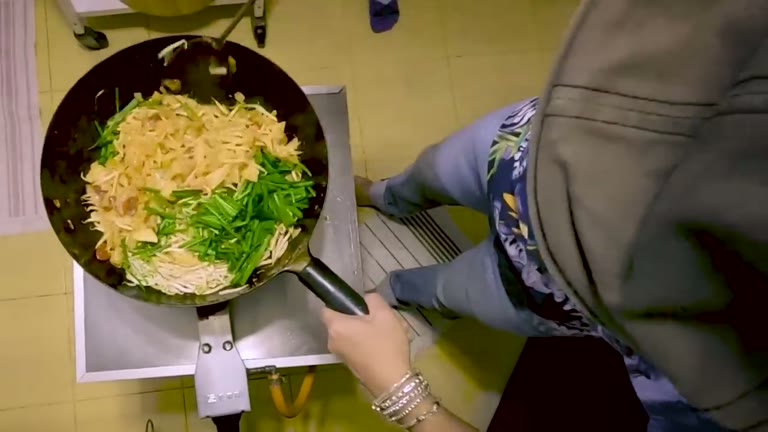
7. Egg first, prawns last
Move the noodle mixture aside to expose an oiled area of the wok and add the egg there. As it starts to set against the hot metal, quickly break it up and fold it through the noodles until no clear liquid egg remains. Only then add the pre-cooked prawns and gently stir until they are hot throughout. They are already cooked; this is a final heating step, not a raw-prawn cooking stage.
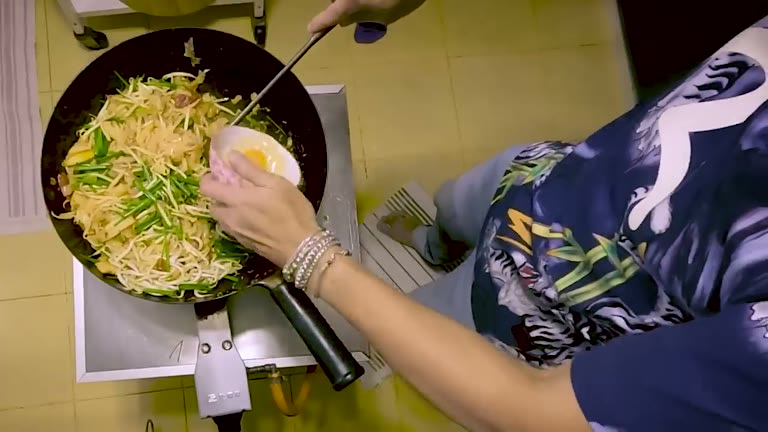
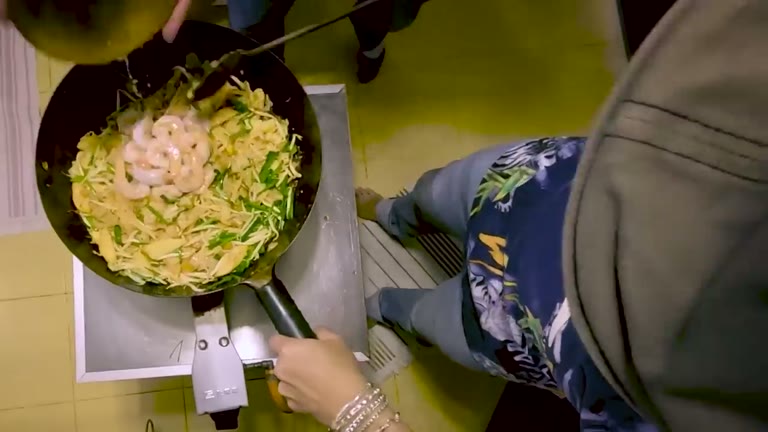
8. Finish with pepper
Finish with pepper and give the noodles a final fold so the seasoning and toppings are evenly distributed. The noodles should be hot and coated, the egg set and the pre-cooked prawns heated through, with no puddle of seasoning left underneath. Transfer to the serving dish and eat immediately while the noodles are hot and the wok aroma is fresh.
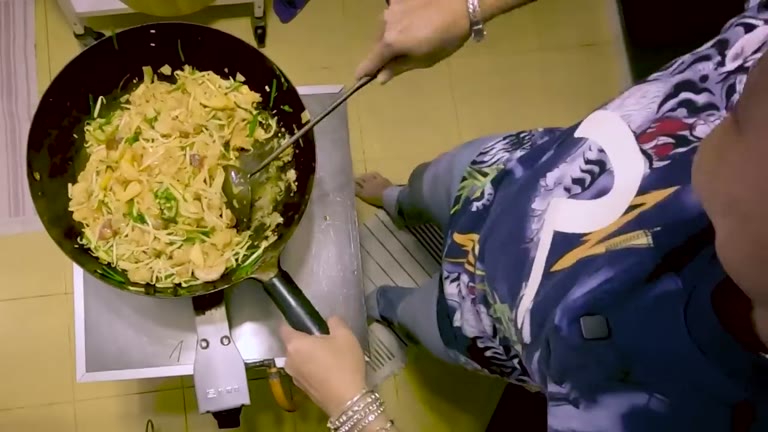
Keep the sequence clear.
Have everything ready before the wok gets hot. Brown the garlic, then coat the noodles in oil before the wet seasoning. Add the egg at the side; the prawns in this version are already pre-cooked. Keep the noodles moving and avoid crowding the wok.
From the wok to the table
Have the plates ready.
Take the serving dish straight to the table while the wok aroma is still there. There’s time to talk once everyone has a plate. For a gathering in Payangan, tell us what you’d love to pass around the table and we’ll discuss a menu that suits your group.