
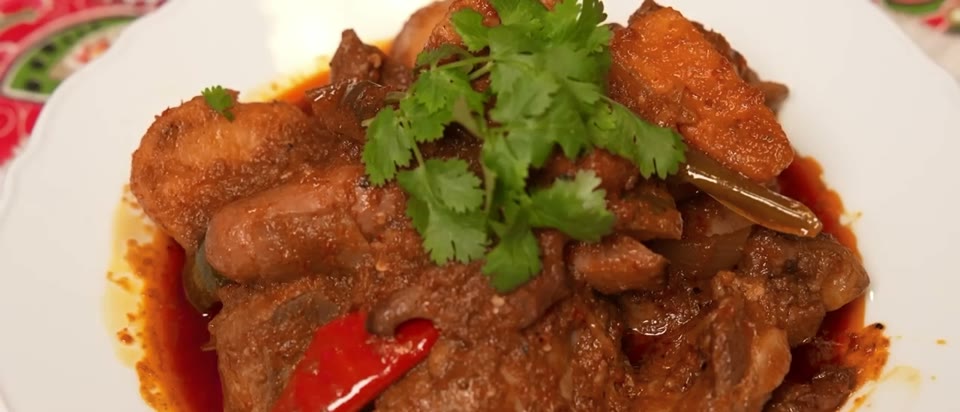
Chris Choo with Joe Augustin
Yesterday’s roast. Today’s reason to gather.
Also known as Devil’s Curry, Curry Devil is a dish of heat, tang and resourcefulness. Cooked meat and bones build the savoury base; pickled cucumber and prepared mustard sharpen the sauce. Add the pre-roasted potatoes at the end so they hold their shape.
Ingredients
Estimated recipe · serves 6–8 with rice. Quantities and timings are practical home-cooking estimates from the prepared ingredients and cooking shown in Episode 38, rather than measured amounts supplied by Chris. Use the aroma, texture and tenderness cues as your guide.
Rempah (spice paste)
- 4 small red onions, about 300g, peeled and roughly chopped
- 8 garlic cloves, about 30g, peeled
- 50g fresh ginger, peeled and sliced
- 8–10 dried red chillies, about 15–20g, stems removed; remove seeds for less heat
- 3–6 chilli padi, to taste; start with fewer for a milder curry
- A little water, just enough to blend
Curry
- 4 tbsp neutral cooking oil, plus about 1 tbsp for roasting potatoes
- 700g cooked roast meat, cut into bite-size chunks
- 250g cooked bacon or ham bones with some meat attached
- 2 carrots, about 250–300g, cut into slim batons
- 150g pickled cucumber, drained and sliced
- 4 cooked sausages, about 200–250g, thickly sliced
- 2 tbsp prepared yellow mustard
- 600g potatoes, cut into roughly 3cm chunks and pre-roasted
- 500ml water or unsalted stock to start; up to another 250ml if needed (adaptation)
- Salt only if needed after tasting
- Optional: 1–2 tbsp mild vinegar, added gradually to taste (adaptation)
- Rice, to serve
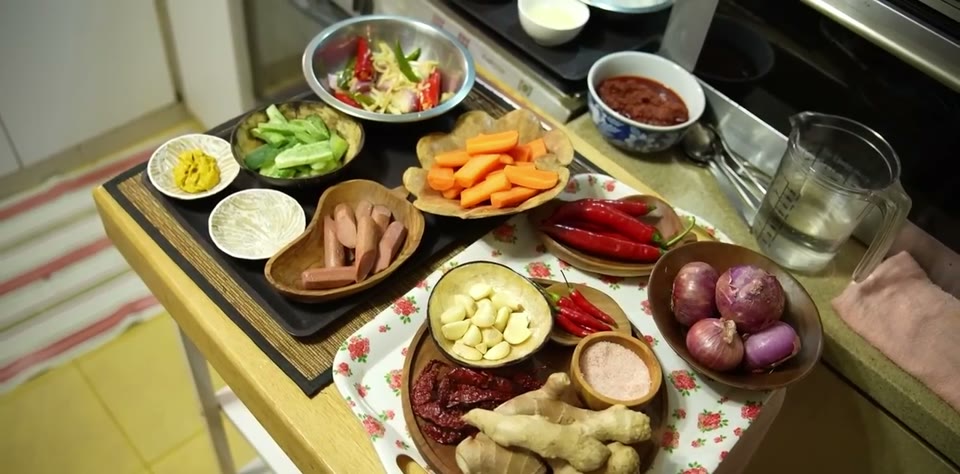
A note on the liquid: The original film does not identify the liquid poured into the wok. Water or unsalted stock is the home-cooking adaptation used here. Optional vinegar is also an adaptation: taste the pickles and mustard before adding more tang.
Download the estimated recipe ↗Method
Prepare the potatoes and chillies.
Heat the oven to 200°C. Toss the potato chunks with about 1 tbsp oil, spread in one layer and roast for 30–40 minutes, turning once, until golden and tender. Meanwhile, cover the dried chillies with hot water for 15–20 minutes until softened, then drain. Have the cooked meat, bones, carrots, pickled cucumber and sausages ready before heating the wok.
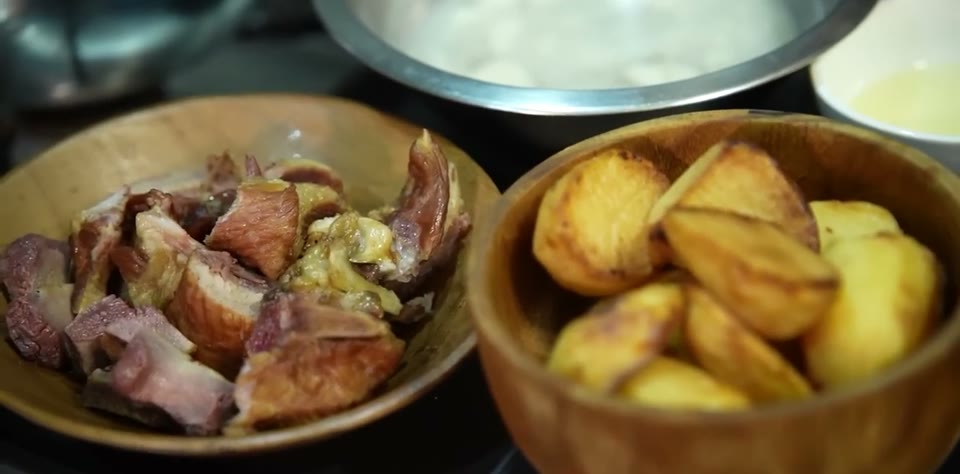
Have the cooked meat and pre-roasted potatoes ready · HOTPLATE Episode 38 footage Blend the rempah.
Blend the onions, garlic, ginger, soaked dried chillies and chilli padi to a thick paste. Add water a tablespoon at a time, only as needed to keep the blades turning. A very wet paste takes longer to fry down.
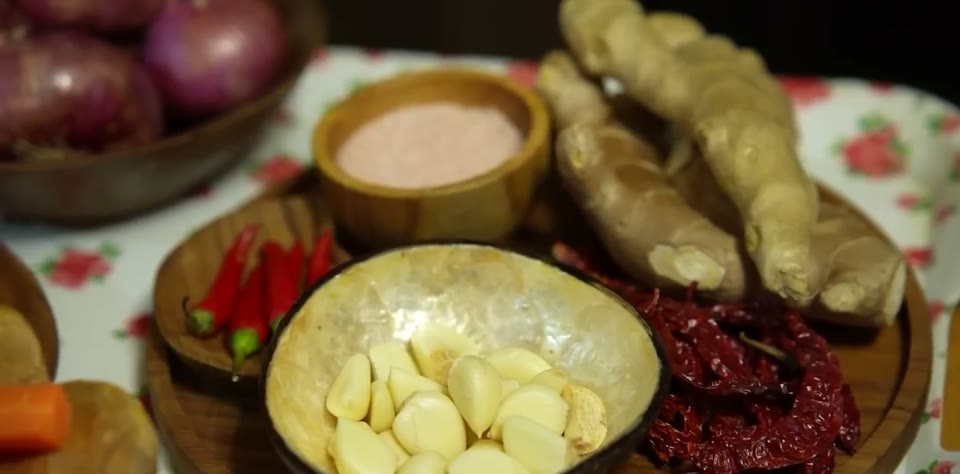
The aromatics and chillies for the spice paste · HOTPLATE Episode 38 footage Fry the paste thoroughly.
Heat 4 tbsp oil in a large wok or wide pot over medium-low heat. Add the rempah carefully and fry, stirring often and scraping the base, for roughly 10–15 minutes. It should lose its raw onion smell, darken slightly and become glossy, with little beads of oil separating at the edges. Reduce the heat if it catches; add a small splash of water if necessary and cook that water away again.
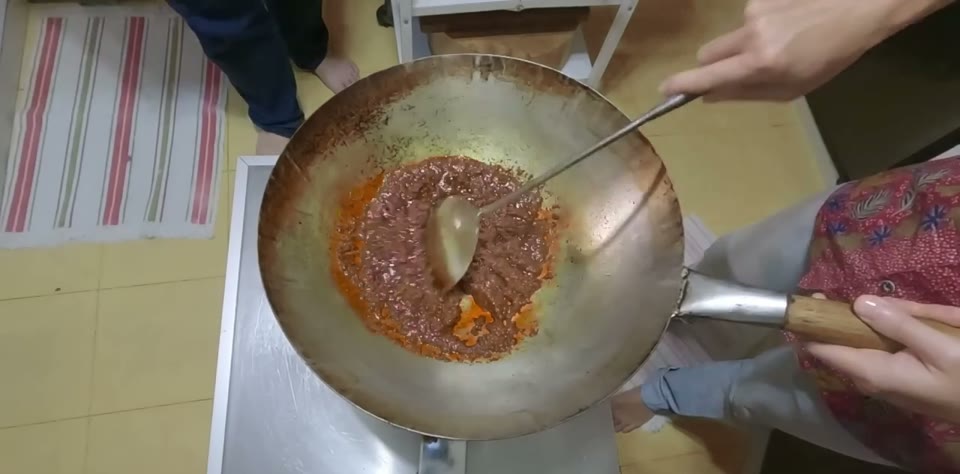
Fry until the paste darkens and oil separates · HOTPLATE Episode 38 footage Coat the cooked meat and bones.
Add the cooked roast meat and bacon/ham bones. Turn through the paste for 2–3 minutes so that the pieces are evenly coated. This version uses cooked leftovers, not raw meat.
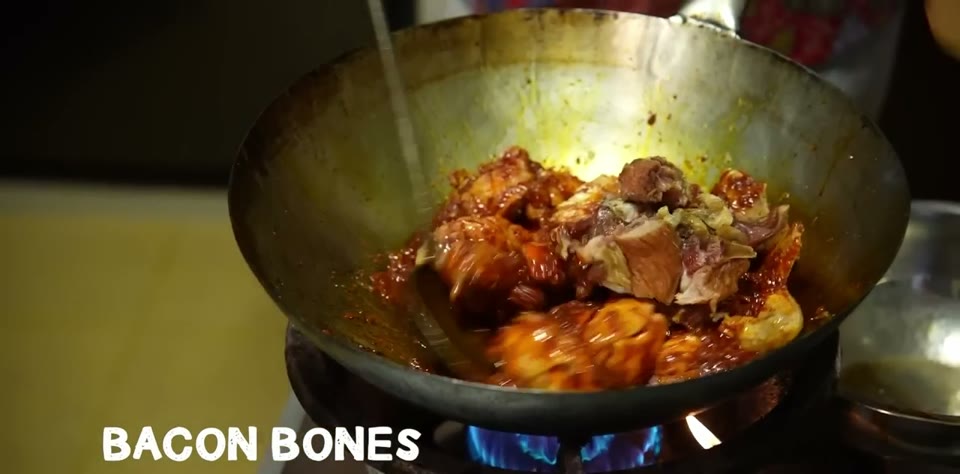
Coat the cooked meat in the rempah · HOTPLATE Episode 38 footage Loosen the curry.
Pour in 500ml water or unsalted stock, scraping up the paste from the base. Bring to a gentle simmer. The gravy should be loose enough to move around the meat; add more liquid in small splashes if necessary.
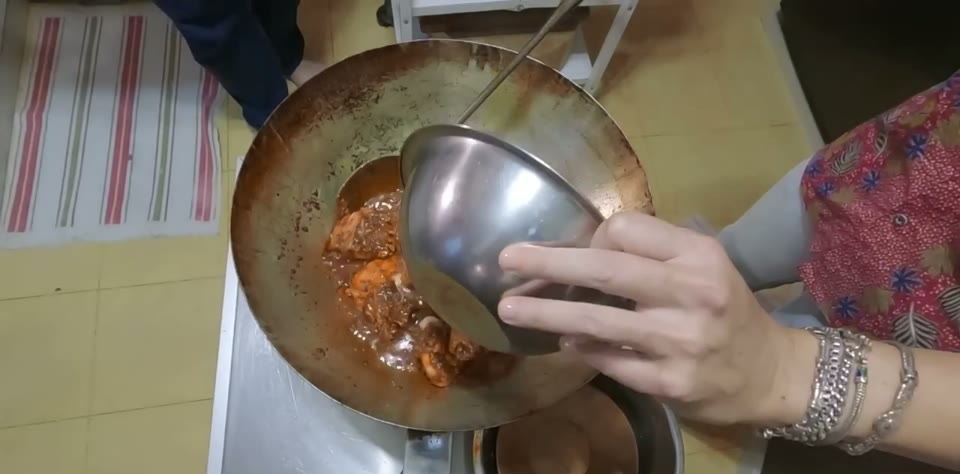
Loosen the gravy; the film does not identify this liquid · HOTPLATE Episode 38 footage Add the carrots and pickled cucumber.
Add the carrots and pickled cucumber, following the order shown in the film. Simmer gently for about 10–15 minutes, stirring occasionally, until the carrots are tender and the flavours have come together. Avoid a fierce boil that breaks up the meat or dries the sauce out.
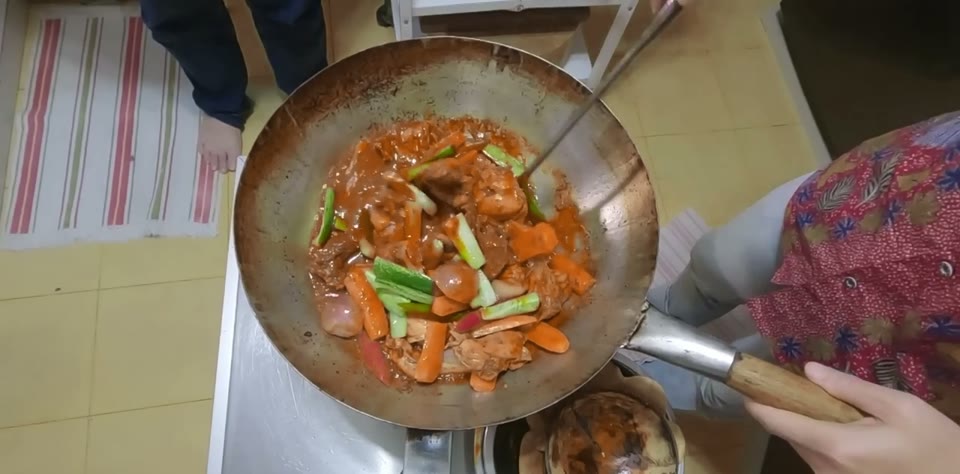
Carrots and pickled cucumber go in before the sausages · HOTPLATE Episode 38 footage Heat the sausages through.
Add the sliced sausages. Stir gently and simmer until hot right through, usually about 3–5 minutes depending on their size and starting temperature. Add a splash of water if the sauce is too thick.
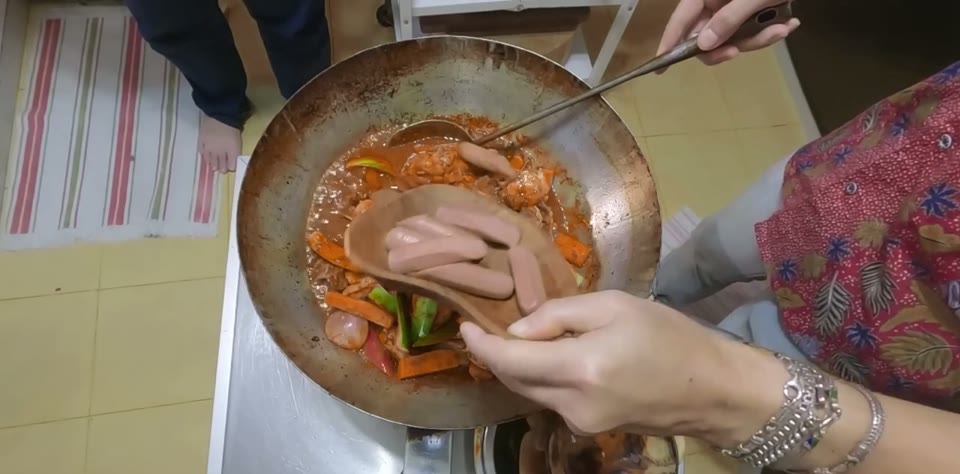
Heat the cooked sausages right through · HOTPLATE Episode 38 footage Stir in the mustard and balance the tang.
Stir in the prepared mustard. Taste before adding salt: the bones, sausages and pickles can already be salty. If the curry needs more tang, add optional vinegar a teaspoon at a time; you may not need the full 1–2 tbsp, or any at all, depending on the pickles.
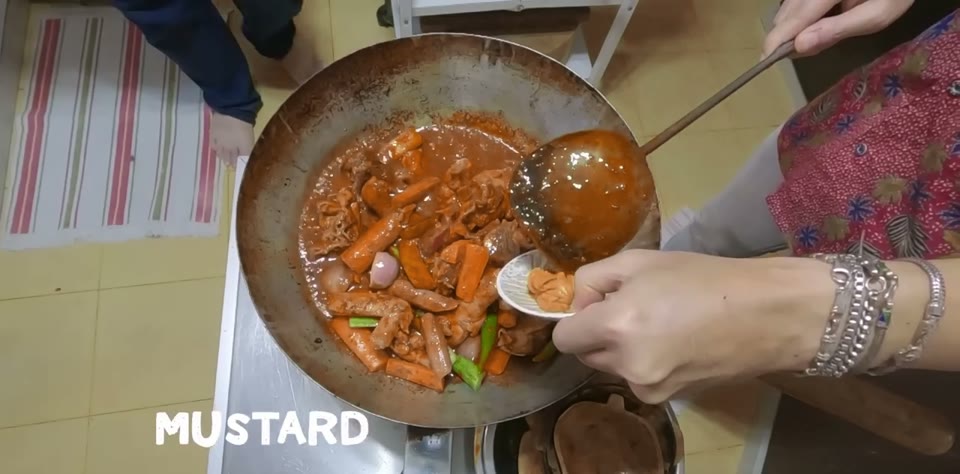
Mustard brings its own tang to the gravy · HOTPLATE Episode 38 footage Fold in the potatoes last.
Fold in the pre-roasted potatoes last. Turn gently to coat without breaking them up. Simmer for about 3–5 minutes until everything is hot through. Adjust with a final splash of water for a spoonable gravy. Serve hot with rice.
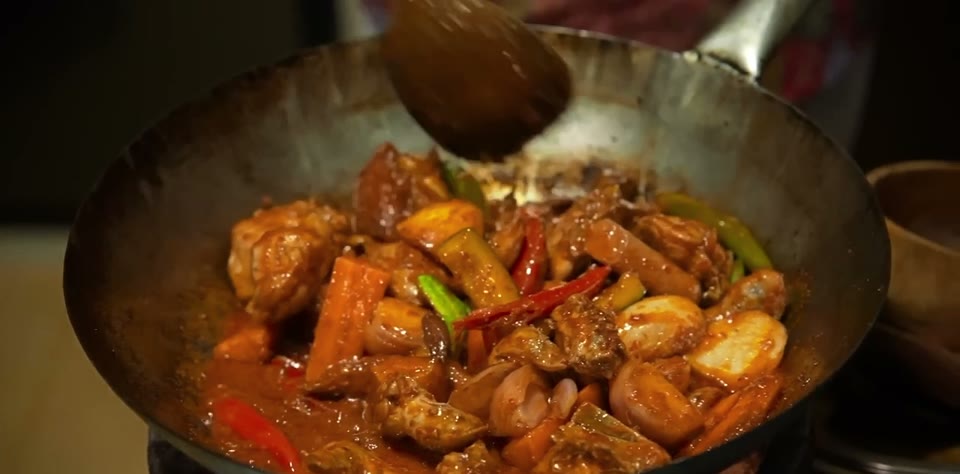
Keep the potato pieces intact as you fold them through · HOTPLATE Episode 38 footage
Follow the order: Cooked meat, liquid, carrots and pickled cucumber, sausages, mustard, then the pre-roasted potatoes. This recipe follows the cooked-leftovers version shown in the film.
A little history at the table
What does Kristang mean?
Kristang is the Portuguese-based creole language of Malacca’s Portuguese-Eurasian community, shaped over time by contact with local Asian languages. The name also refers to the community and its culture.
Portuguese ships first reached Malacca in 1509. In 1511, Afonso de Albuquerque’s fleet captured the trading port. Over generations, Portuguese and local connections helped shape a distinct Eurasian culture. That history is part of the setting for this dish; it does not mean the curry was invented in 1511.
In Kristang, debal means “leftovers”: the idea of giving roast meat, sausages and bones another generous meal is at the heart of this curry.
Historical context: NLB BiblioAsia on Portugal’s linguistic legacy and Meeting with the Sea. The film’s historical reenactments are illustrative AI-generated scenes, rather than archival footage.
From the episode
Watch the film.
Your table in Bali
Who would you invite?
For a gathering in Payangan, tell Relish who you’re bringing and what your guests love to eat. We’ll talk through a menu for the occasion.
Plan my gathering ↗